


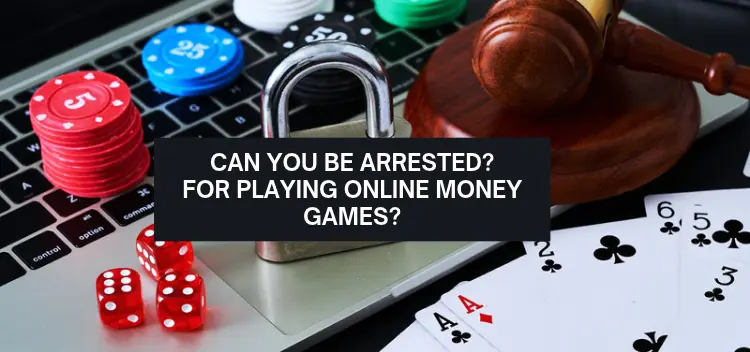
An employee deposits ₹5,000 on an offshore gaming app, wins twice, then finds that withdrawals have stopped and the app has disappeared from the Indian app store. A week later, the bank seeks details about several gaming-related transfers. The immediate fear is arrest.
Under the Online Gaming Act 2025, a person who merely plays an online money game isn’t expressly assigned a criminal penalty. That doesn’t make participation legally harmless.
Transactions may be blocked, deposits can become difficult to recover, and a player’s conduct may attract scrutiny under state gambling laws or other criminal statutes if it extends beyond personal play.
The distinction matters. Playing, promoting, collecting money, referring users and running a private gaming group don’t carry the same legal exposure.
What the Online Gaming Act 2025 Actually Prohibits
The Promotion and Regulation of Online Gaming Act, 2025 applies throughout India. It includes services operated from outside India but offered to users within the country. It came into force on 1 May 2026.
An “online money game” covers an online game played after paying fees, depositing money or providing another stake with the expectation of monetary or equivalent gain. The definition applies whether the outcome depends on -
- Skill
- Chance
- A mixture of both.
E-sports that fall within the statutory definition are excluded.
That last point unsettles assumptions formed under older online betting laws. Calling a game rummy, poker, fantasy sport, or a “skill contest” won’t, by itself, take the product outside the central prohibition if users stake money expecting winnings.
The Act separates three broad categories:
|
Activity |
Position under the central law |
|
Online money game involving stakes and expected winnings |
Prohibited |
|
Online social game without monetary stakes |
Permitted, subject to applicable regulation |
|
Registered e-sport with entry or administrative fees but no betting or wagering |
Recognised category |
|
Subscription-based game with no stake-linked monetary gain |
May qualify as an online social game |
Section 5 prohibits offering, aiding, abetting, inducing or engaging in the offering of an online money game or gaming service. Section 6 targets advertisements, while Section 7 bars banks, financial institutions and other persons from facilitating payments for such services.
Does a Paid Game Automatically Become an Online Money Game?
No. A genuine subscription or access fee may be permissible if it isn’t a stake and users don’t expect stake-linked monetary winnings.
Are fantasy sports and Rummy Exempt Because They Involve Skill?
There is no automatic exemption. Under the central Act, the presence of a monetary stake matters even where skill influences the result.
Can a Player Be Arrested Merely for Playing?
The short answer is ordinarily no, not under the Online Gaming Act 2025's penalty clause alone.
Section 9 punishes anyone who offers an online money gaming service, makes prohibited advertisements, or facilitates prohibited fund transfers. It doesn’t prescribe a separate punishment for a user who simply enters a game and places a stake.
The drafting is significant because the Act defines “user” separately but doesn’t attach a player-specific sentence or fine to that status.
The answer changes if the supposed player does more.
For instance, consider someone who -
- Creates a WhatsApp group
- Circulates an offshore betting link
- Collects deposits in a personal UPI account
- Receives commission for every new user.
That person may describe himself as a player. Still, investigators could examine whether he aided, induced or facilitated the service. Substance will outrun the label.
When Arrest Becomes a Real Risk
Offences that fall under Sections 5 and 7 are cognisable and non-bailable. Therefore, police may arrest without a warrant where the statutory conditions for arrest are met. Meanwhile, bail isn’t available as an automatic right at the police station.
Offering a prohibited service or facilitating payments can attract imprisonment of up to three years, a fine up to ₹1 crore, or both. Moreover, advertising carries up to two years’ imprisonment, a fine up to ₹50 lakh, or both. Meanwhile, repeat offences have higher mandatory minimums and maximums.
The Online Gaming Authority of India has also told the following entities to turn off prohibited support and implement checks:
- App stores
- Cloud providers
- Banks
- Social-media intermediaries
- OTT platforms
- Advertising agencies.
Could a Casual Player Still Face Questioning?
Yes. Questioning, account verification, or a device examination might happen. They are not the same as prosecution. Still, an investigation may widen if records indicate -
- Referral income
- Payment collection
- Account lending
- Fraud
- Money laundering
- Organising games.
Can Police Arrest Someone Who Only Lost Money on an App?
The central Act contains no express player penalty. Arrest may still arise under another applicable law or if the person helped operate the service.
Is an Offence Under the Act Bailable?
Advertising offences aren’t declared non-bailable by Section 10. Offences concerning prohibited services and fund facilitation are cognisable and non-bailable.
Player Risks Beyond the Central Penalty Clause
The absence of a specific punishment for simple play isn’t a legal clearance certificate.
States still legislate on betting and gambling. State statutes differ in -
- Definitions
- Territorial reach
- Exemptions
- Penalties.
The central Act itself states that it operates alongside other laws. It does not displace every state gambling offence.
Four risks deserve attention:
1. State Prosecution
A state law may punish -
- Betting
- Gambling
- Visiting a gaming house
- Assisting its operation.
Location can become contentious where the user, server, operator and payment account are in different places.
2. Frozen or Reviewed Accounts
Repeated transfers to flagged merchants, mule accounts, or offshore operators can cause trouble. They trigger bank monitoring and law-enforcement enquiries.
3. Unrecoverable Balances
An illegal operator may vanish, reject withdrawals or demand another “tax” payment. Contract enforcement becomes awkward when the underlying transaction is prohibited.
4. Secondary Offences
Using another person’s account, laundering gaming proceeds, impersonating a KYC holder or knowingly routing third-party deposits can create exposure far beyond gaming legislation.
There’s a fair trade-off here. Rapid reporting may improve the chance of stopping a fraudulent transfer, but your complaint also creates a written record of what you paid, where it went and why. Accuracy matters more than a made-up description like “online shopping”.
Businesses face a sharper edge. A creator who posts a referral code, an agency that buys gaming advertisements, or a payment intermediary that processes disguised merchant transactions may move from spectator to facilitator.
The Authority’s July 2026 advisory expressly warns that liability may reach people who support the money-gaming ecosystem. This happens even if they aren’t the primary operator.
Can a Bank Freeze Money Received from a Gaming Platform?
Under applicable banking or criminal procedures, a bank or investigating agency may restrict suspicious funds. The account holder should request the written basis promptly.
Does Using an Overseas Gaming Website Avoid Indian Law?
No. The Act extends to offshore services offered within India. But investigation and recovery may be slower across jurisdictions.
What to Do If Police, Your Bank or a Gaming Platform Contacts You
Don’t delete chats, transaction records or the application. Deleting them may remove evidence that you acted only as a user. Moreover, hurried wiping looks worse than the original payment.
Preserve these materials:
- Bank statements, UPI references and wallet records.
- Screenshots showing deposits, withdrawals, balances and failed requests.
- The app’s URL, operator details, terms and support messages.
- Referral records, if any, including whether you received commission.
- Every police notice, bank email and account-freeze communication.
Next, identify the nature of the contact. A bank’s compliance query, a witness notice and an accusation of facilitating illegal gaming call for different responses.
Then, ask for the following:
- Complaint number
- Police station
- Cited sections
- The investigating officer’s details.
If an account has been frozen, seek the order or instruction behind the restriction. Don’t rely on a call-centre explanation.
Don’t sign an incomplete statement or casually surrender passwords. Meanwhile, you may cooperate and ask that the request follow lawful procedure.
Legal Safeguards
Article 20(3) of the Constitution protects an accused person against compelled self-incrimination. Article 22 provides safeguards surrounding arrest and access to legal representation.
If arrest appears possible, seek advice on anticipatory bail without delay. A lawyer providing legal services in India should examine your role, transaction path, and the relevant state law, not merely repeat that “players aren’t punished”.
That sentence may be correct under Section 9 of the central Act. It might still miss an allegation under another statute.
Report lost money from a deceptive app quickly. You can report through the National Cyber Crime Reporting Portal or the 1930 helpline. Then, send written notice to the bank or payment provider.
Make sure to describe the transaction truthfully. A false chargeback story can create a second problem.
Should I Respond to an Informal Police Phone Call?
Before giving a detailed statement or handing over your device, do the following:
- Verify the caller and police station
- Note the purpose
- Obtain legal advice.
Can I Recover Money Left in a Prohibited Gaming App?
Recovery isn’t guaranteed. Prompt bank and cybercrime reporting may help where fraud occurred. But illegality can complicate contractual or consumer remedies. Contact a cybercrime expert now!
Simple Play Is Different From Facilitating a Money Game
The Online Gaming Act 2025 imposes express criminal penalties mainly on operators, advertisers, and people facilitating prohibited payments. Under the current wording, casual participation alone doesn’t carry a specified punishment under Section 9.
Still, the safe answer can’t stop there. Your state, payment trail and actual conduct matter. A user who places one bet is in a different position from someone who -
- Recruits players, handles deposits
- Lends an account to an offshore operator.
Sections 5 and 7 offences are classified as cognisable and non-bailable. So, that factual boundary may decide whether you’re treated as a witness, victim or accused.
If the police or bank contacts you, preserve the record and identify the invoked law. Also, seek advice before making broad admissions. What looks like a gaming query can become a facilitation or financial-fraud investigation.
Share:





Share on
×